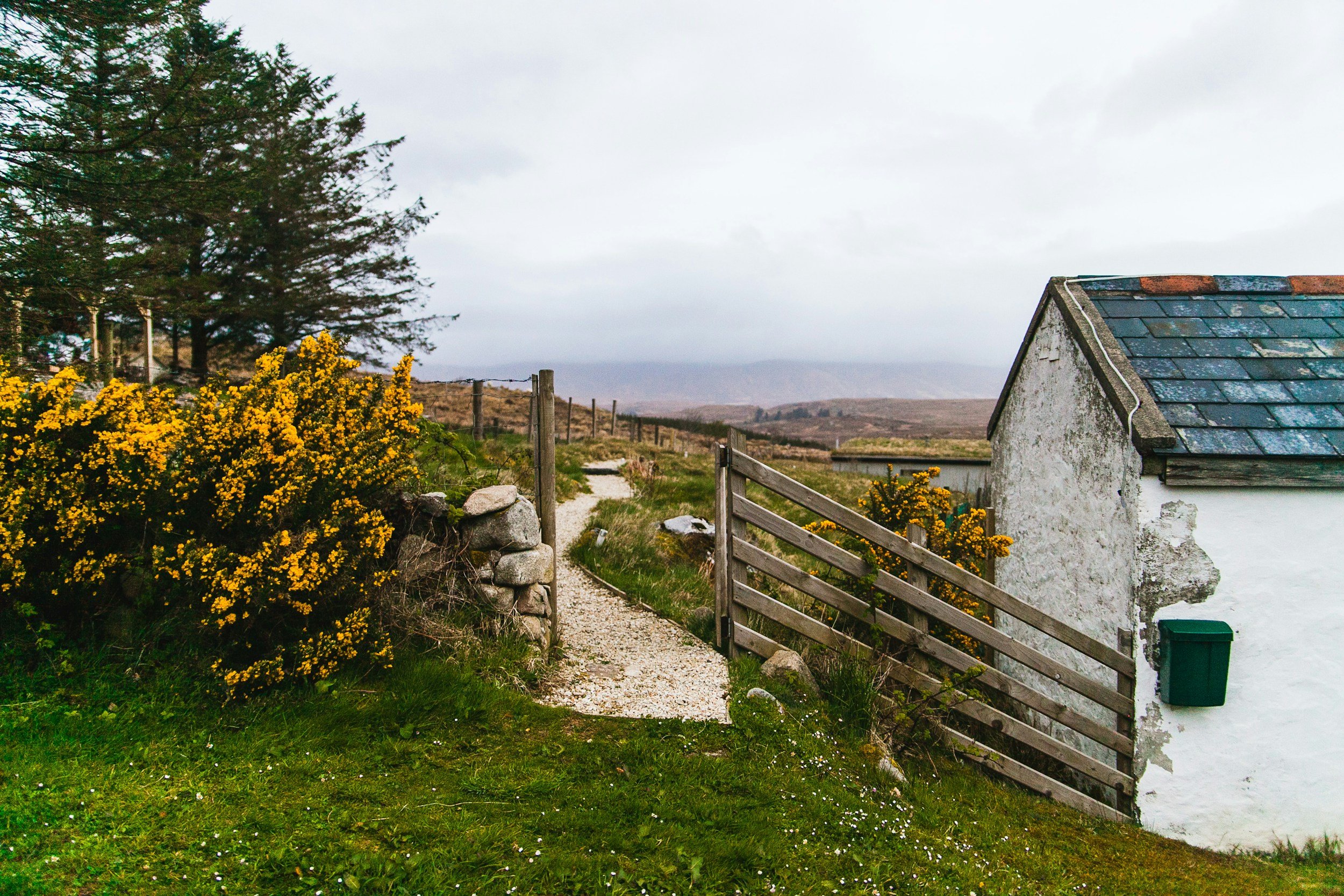
RETURNING TO IRELAND
The decision to return to Ireland can be a difficult one to make and there are a lot of important issues to consider. Just like emigrating, it is important to do your research and plan accordingly. There are fantastic online resources to help you with the process. You can also book an appointment with our Outreach worker or contact Dublin based Crosscare Irish Diaspora Support Project for information and support. The Irish Support Agency also holds regular Returning to Ireland information workshops. To be notified of our next session please contact us to have your name added to the mailing list.
Returning with non-EEA partners
There is no automatic entitlement under Irish Law for an Irish citizen to have their non EEA spouse, civil partner or de facto partner to join them in Ireland. However applications for residency based on marriage / civil partnership or de facto relationship with an Irish citizen can be granted provided certain conditions are fulfilled.
If you would like a copy of the slides used in this presentation, click here.
Residency for non-EEA spouse/civil partners of Irish Citizens
Process
Enter Ireland and inform the Immigration Officer of your intentions to apply for residency. From there you need to make an appointment online to register with Garda National Immigration Bureau.
Have proof in the form of a Marriage/civil partnership certificate, passports and evidence of joint address.
At this time, stamp 4 immigration permission may be issued giving the right to live and work in Ireland without the need for an employment permit. This is valid for 1-5 years.
If they require clarification of issues, you may need to make a written application to the ‘Spouse of an Irish National’ Unit of the Irish Naturalisation and Immigration Service (INIS) who will request a relationship history, past immigration to Ireland, finances and your future plans. If so, you may be issued with temporary stamp (no work rights) until residency permission is granted.
Guideline processing time
12 months
Further Information
Crosscare Migrant Project's Factsheet: Bringing Non Irish family Members
Residency for non-EEA de facto partners of Irish Citizens
Process
If your de facto partner is a citizen of a non-EEA country, they need to apply for Pre-Clearance before coming to Ireland. This applies to partners from both Visa and Non-Visa required countries. This means:
Before you return to Ireland, your non-EEA de facto partner must have applied for and been granted ‘pre-clearance’ by the Irish Naturalisation and Immigration Service (INIS).
Your partner must wait outside Ireland until their pre-clearance is granted.
Once pre-clearance is granted they can apply for an entry visa (if visa required, and this should be a quick process) or if they are non-visa required they can travel to Ireland directly.
Once in Ireland your partner will need to register with a local Immigration Officer for permission to live and work here based on your relationship.
This scheme is only relevant to those who are living outside Ireland.
Have proof of full account relationship history, proof of finances, and evidence of having lived together for the previous two years.
Further Information
Crosscare Migrant Project's Factsheet: Bringing Non Irish Family Members
REturning with Children
Passport: Try to get your child an Irish passport before you return. They can enter on an Australian passport, once they are eligible for Irish citizenship and travelling with you, their Irish citizen parent/guardian. www.dfa.ie/passportonline/
PPS number: This is a unique personal reference number that you need to access services in Ireland. You will need to apply one for your child if they were not born in Ireland. www.gov.ie/en/service/12e6de-get-a-personal-public-service-pps-number/
Child Benefit: A universal payment for parents with children under age 16 (or up to age 18 in some cases). PPS numbers needed. No means test, but must satisfy the Habitual Residence Condition. Application usually made by mother. €140/month per child. www.gov.ie/en/service/f14140-child-benefit/
If you would like a copy of the slides used in the presentation, click here.
Access to services
If you would like a copy of the slides used in the presentation, click here.
Social Welfare
Returning Irish migrants should be eligible for most social welfare payments, including job-seekers allowance, the state pension, carer’s allowance or child benefit.
You must satisfy the Habitual Residence Condition and prove you are back in Ireland to live permanently. Before you make the move back you should collect evidence that you have ended your previous life abroad
left your job in Australia
that your tenancy has finished,
that you have closed your bank account
Present a cover letter detailing your life in Ireland before you moved, the reason you left and reason for return along with supporting evidence that you’ve set up here once again (a lease, details of your kids’ school, an Irish bank account, a library card, proof of registering to vote etc.)
How to apply
If you wish to apply for a particular social welfare payment, you should contact your social welfare local office for an application form and an information leaflet. You can also access forms online. The address and phone number of your social welfare local office is also available here.
Public Health Care
The public health system is open to all who are “ordinarily resident” in Ireland.
Below is a snap shot of approximate costs, subject to change.
€100 to attend the A&E unit of your local hospital
€75 nightly fee treatment in a public hospital
GP fees start around €60
Free maternity services (during pregnancy and up to 6 weeks after birth)
Entitlement is primarily based on residency and means, rather than on your payment of tax or pay-related social insurance (PRSI). Any person, regardless of nationality, who is accepted by the Health Service Executive (HSE) as being ordinarily resident in Ireland has eligibility to health services.
Medical / GP visit cards may be available if on a low income and GP visit cards available to all children under the age of six.
Education
Free State education is available at primary and secondary level with the option to use private school for an appropriate fee.
Education is compulsory for ages 6 – 16 or until students have completed 3 years of second-level education.
Irish language classes are compulsory at secondary level with the exemption for children who were educated outside Ireland up to 11 years of age.
The school year generally starts September and ends June. Your child may be able to enter during school year but note that waiting lists can be long.
To access student grants / free fees at third level, the student must have lived in Ireland for three of the last five years.
Online Resources
Crosscare Irish Diaspora Support Project
Returning to live in northern ireland
If you are returning to live in Northern Ireland you will need to establish habitual residence
Crosscare Migrant Project have put together some helpful resources which you can access here.